Laparoscopic Ovarian Drilling in Clomiphene Citrate-Resistant Polycystic Ovary Syndrome at Ehs Nouar Fadéla Oran: Evaluation of Ovulation Restoration and Pregnancy Rate
1Lecturer at the Ehs Nouar Fadela Oran, Algeria
2Lecturer at the Oran Regional Military Hospital, Algeria
Author and article information
Cite this as
Sihem D, Skandar B. Laparoscopic Ovarian Drilling in Clomiphene Citrate-Resistant Polycystic Ovary Syndrome at Ehs Nouar Fadéla Oran: Evaluation of Ovulation Restoration and Pregnancy Rate. Adv Women’s Health. 2026;4(1): 13-16. Available from: 10.17352/awh.000006
Copyright License
© 2026 Sihem D, et al. This is an open-access article distributed under the terms of the Creative Commons Attribution License, which permits unrestricted use, distribution, and reproduction in any medium, provided the original author and source are credited.Abstract
Objective: To evaluate the therapeutic efficacy of laparoscopic ovarian drilling (LOD) on the induction of ovulation and the occurrence of pregnancies in patients suffering from clomiphene citrate (CC) resistant Polycystic Ovary Syndrome (PCOS).
Materials and Methods: A prospective study was conducted on 29 infertile patients with PCOS meeting the Rotterdam criteria and documented resistance to clomiphene citrate (CC). Patients underwent laparoscopic ovarian drilling using monopolar electrocoagulation (4 perforations per ovary). Postoperative hormonal status, as well as ovulation and pregnancy rates, were assessed during a 12-month follow-up.
Results: Ovarian drilling resulted in a significant normalization of hormonal parameters (decrease in LH, the LH/FSH ratio, and circulating androgens). A high rate of restoration of spontaneous ovulation was observed, leading to spontaneous pregnancies mostly achieved within the first 6 postoperative months.
Conclusion: Laparoscopic ovarian drilling is a preferred therapeutic alternative, effective and safe compared to gonadotropins, reducing the risks of ovarian hyperstimulation and multiple pregnancies in anovulatory PCOS patients resistant to clomiphene.
Abbreviations
AMH: Anti-Müllerian hormone; BMI: Body mass index; CC: Clomiphene citrate; FSH: Follicle-stimulating hormone; IVF: In vitro fertilization; LH: Luteinizing hormone; LOD: Laparoscopic ovarian drilling; OHSS: Ovarian hyperstimulation syndrome; PCOS: Polycystic ovary syndrome
Introduction
Polycystic Ovary Syndrome (PCOS) is the most common cause of anovulatory infertility in women of reproductive age, affecting 6% to 13% of this population. First-line medical management relies on lifestyle modifications and ovulation induction with clomiphene citrate (CC). However, approximately 15% to 20% of patients develop resistance to clomiphene and fail to ovulate [1,2].
Faced with this resistance, two main therapeutic options are available: the use of exogenous gonadotropins or laparoscopic ovarian drilling (LOD). Although gonadotropins are effective, they carry a high risk of ovarian hyperstimulation syndrome (OHSS) and multiple pregnancies [2-5].
First proposed by Gjönnaess in 1984, ovarian drilling aims to partially destroy the androgen-secreting hyperplastic ovarian stroma using monopolar electrocoagulation or laser [6,7-14]. Our prospective study aims to analyze the endocrine impact and 12-month reproductive outcomes of PCOS patients treated with ovarian drilling at our EHS Nouar Fadéla Oran facility.
Materials and methods
Study design
This was a prospective clinical interventional study conducted among infertile patients with polycystic ovary syndrome (PCOS) who demonstrated resistance to clomiphene citrate. The study evaluated the endocrine and reproductive outcomes following laparoscopic ovarian drilling (LOD). Patients were assessed before the intervention and followed prospectively for 12 months after surgery. The principal outcomes included changes in hormonal parameters, restoration of ovulation, and occurrence of pregnancy during follow-up.
Population and inclusion criteria
Prospective study including 29 infertile patients followed in gynecology-obstetrics and assisted reproductive technology consultations.
- Inclusion Criteria:
- PCOS diagnosis retained according to the Rotterdam criteria (presence of at least 2 out of 3 criteria: oligo/anovulation, clinical or biological hyperandrogenism, polycystic appearance of the ovaries on ultrasound). [1,2]
- Proven resistance to clomiphene citrate (absence of ovulation after administration of a maximum dose of 150 mg/day for 5 days per cycle, for at least 3 cycles). [3,6]
- Tubal patency confirmed and absence of associated severe male factor (normal sperm count of partner).
- Sample Size
- A total of 29 infertile patients with PCOS and documented resistance to clomiphene citrate were included in the prospective study. The sample consisted of patients who fulfilled the predefined eligibility criteria and underwent laparoscopic ovarian drilling.
Preoperative assessment
A baseline hormonal assessment was performed on day 3 of the spontaneous or progestin-induced cycle: LH, FSH, Estradiol, Total Testosterone, and Delta-4-Androstenedione. A preoperative transvaginal ultrasound was performed to measure ovarian volume and count the number of follicles per ovary.
Surgical Technique of Ovarian Drilling
The procedure was performed under general anesthesia via laparoscopy:
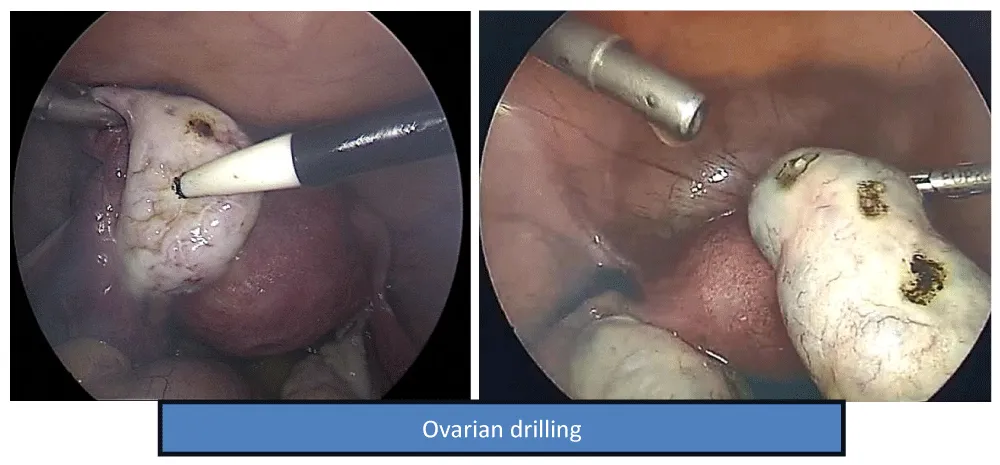
- Making the perforations: Use of a monopolar needle (cutting/coagulation current set to 40 W). Application of 4 perforations per ovary, 4 mm deep, for 3 to 5 seconds each [9,12,14].
- Abundant pelvic irrigation with cold saline solution to cool the ovaries and prevent the formation of post-operative adhesions [6,20] (Figure 1).
Monitoring and evaluation criteria
Patients underwent biological reassessment at 1 and 3 months (LH, FSH, and testosterone levels). Ovulation was monitored using basal body temperature charting, progesterone measurements on day 21 of the cycle, and follicular ultrasound monitoring. Follow-up continued for 12 months to record the occurrence of spontaneous or induced pregnancies.
Statistical analysis
Continuous variables were summarized using appropriate descriptive statistics, including mean and standard deviation where applicable. Categorical variables were summarized using frequencies and percentages. Preoperative and postoperative hormonal measurements were compared using an appropriate paired statistical test for continuous variables. Mean differences were reported together with corresponding 95% confidence intervals. A two-sided p-value of <0.05 was considered statistically significant.
Results
Basic characteristics of the cohort
The sociodemographic and clinical characteristics of the patients (age, BMI, type and duration of infertility) were recorded.
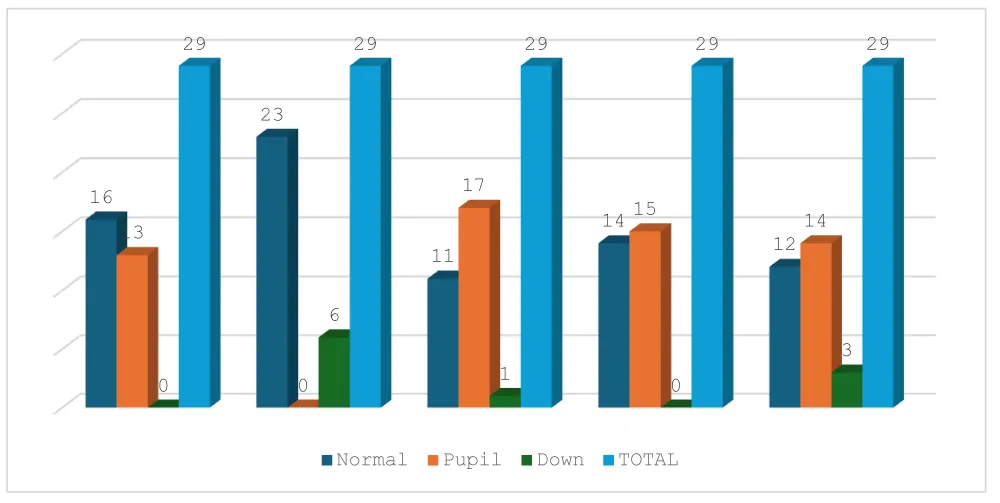
Pregnancy achieved after ovarian drilling
Following ovarian drilling, a significant decrease in mean circulating LH levels and the LH/FSH ratio was observed within the first month. A decrease in total serum testosterone concentrations was also documented (Tables 1,2).
Ovulation and pregnancy restoration rates
- Restoration of ovulation: A majority of patients restored spontaneous ovulatory cycles within 3 months of surgery [8,13-15,18] In patients who remained anovulatory at 3 months, reintroduction of clomiphene citrate overcame the initial resistance.
- Pregnancy rate: The majority of conceptions were achieved spontaneously during the first 6 post-operative months[5,8,10,11,14,19].
Discussion
Laparoscopic ovarian drilling is emerging as an effective therapeutic alternative for PCOS patients resistant to clomiphene. Our study demonstrates rapid correction of the endocrine disorder characteristic of PCOS.
Perforation of the ovarian stroma leads to local destruction of hyperplastic theca cells, immediately reducing androgen production. The decrease in hyperandrogenism and inhibin B removes the inhibition of pituitary FSH secretion, thus reinitiating folliculogenesis and allowing spontaneous ovulation to occur [3].
Compared to gonadotropin stimulation, drilling offers several major advantages:
- No risk of ovarian hyperstimulation syndrome (OHSS) [4,5,19].
- Low rate of multiple pregnancies, approaching the rates observed in the general population.
- Prolonged effect over timeallowing for repeated spontaneous pregnancies without reintervention.
- Restoration of sensitivity to clomiphenein patients who remain anovulatory after surgery.
The reservations expressed regarding this technique mainly concern the risk of postoperative peritoneal adhesions and the potential for depletion of ovarian reserve in cases of excessive energy delivery [9,16,17,20-23]. However, our study shows that a standardized technique limited to four perforations per ovary offers an excellent compromise between therapeutic efficacy and preservation of ovarian function. In our study, 13 pregnancies were achieved out of 29 patients with infertility related to polycystic ovary syndrome, representing 44.8%, a significant rate reflecting the effectiveness of ovarian drilling in restoring ovulation.
Limitations
This study has several limitations. First, the sample size was relatively small, with only 29 patients included, which limits the statistical power and generalizability of the findings. Second, the study did not include a contemporaneous control or comparator group receiving an alternative treatment for clomiphene-resistant PCOS. Therefore, causal comparisons between laparoscopic ovarian drilling and other treatment strategies cannot be established from the present data. Third, the follow-up period was limited to 12 months, which restricts assessment of longer-term reproductive outcomes and potential effects on ovarian reserve. Finally, the study was conducted at a single institution, which may limit the external applicability of the findings.
Conclusion
Laparoscopic ovarian drilling is a simple, safe, and highly effective surgical technique for managing infertility related to PCOS resistant to clomiphene citrate. By restoring spontaneous ovulatory cycles and normalizing the hormonal profile, it allows for a high pregnancy rate without exposing the patient to the major complications of second-line drug treatments. It remains a key component of the treatment protocol before referring patients to in vitro fertilization (IVF).
References
- Essatara Y, Benazzouz H. Placenta percreta with bladder invasion. Pan Afr Med J. 2014. Available from: https://doi.org/10.11604/pamj.2014.18.88.4631
- Bouwens J, Coulon C, Azaïs H, Bigot J, Houfflin-Debarge V. Placenta accreta. Gynecol Obstet Fertil. 2014. Available from: https://doi.org/10.1016/j.gyobfe.2014.01.009
- Lansac J, Descamps P, Goffinet F. Practice of childbirth. 6th ed. Issy-les-Moulineaux: Elsevier Masson; 2016. Available from: https://shop.elsevier.com/books/pratique-de-laccouchement/lansac/978-2-294-74776-2
- Rotterdam ESHRE/ASRM-Sponsored PCOS Consensus Workshop Group. Revised 2003 consensus on diagnostic criteria and long-term health risks related to polycystic ovary syndrome (PCOS). Hum Reprod. 2004;19(1):41-7. Available from: https://doi.org/10.1093/humrep/deh098
- Teede HJ, Tay CT, Laven JJE, Dokras A, Moran LJ, Piltonen TT, et al. Recommendations from the 2023 International Evidence-based Guideline for the Assessment and Management of Polycystic Ovary Syndrome. J Clin Endocrinol Metab. 2023;108(10):2447-69. Available from: https://doi.org/10.1210/clinem/dgad463
- Legro RS, Brzyski RG, Diamond MP, Coutifaris C, Schlaff WD, Casson P, et al. Letrozole versus clomiphene for infertility in the polycystic ovary syndrome. N Engl J Med. 2014;371(2):119-29. Available from: https://doi.org/10.1056/nejmoa1313517
- Bayram N, van Wely M, Kaaijk EM, Bossuyt PMM, van der Veen F. Using an electrocautery strategy or recombinant follicle-stimulating hormone to induce ovulation in polycystic ovary syndrome: randomised controlled trial. BMJ. 2004;328:192. Available from: https://doi.org/10.1136/bmj.b3244
- Farquhar C, Lilford RJ, Marjoribanks J, Vandekerckhove P. Laparoscopic 'drilling' by diathermy or laser for ovulation induction in anovulatory polycystic ovary syndrome. Cochrane Database Syst Rev. 2007;(3):CD001122. Available from: https://www.cochranelibrary.com/cdsr/doi/10.1002/14651858.CD001122.pub3/abstract
- Flyckt RL, Goldberg JM. Laparoscopic ovarian drilling for clomiphene-resistant polycystic ovary syndrome. Semin Reprod Med. 2011;29(2):138-46. Available from: https://doi.org/10.1055/s-0031-1272476
- Gjönnaess H. Polycystic ovarian syndrome treated by ovarian electrocautery through the laparoscope. Fertil Steril. 1984;41(1):20-5. Available from: https://doi.org/10.1016/s0015-0282(16)47534-5
- Amer SAK, Li TC, Ledger WL. Ovulation induction using laparoscopic ovarian drilling in women with polycystic ovarian syndrome: predictors of success. Hum Reprod. 2004;19(8):1719-24. Available from: https://doi.org/10.1093/humrep/deh343
- Amer SAK, Li TC, Cooke ID. Laparoscopic ovarian diathermy in women with polycystic ovarian syndrome: a retrospective study on the influence of the amount of energy used on the outcome. Hum Reprod. 2002;17(4):1046-51. Available from: https://doi.org/10.1093/humrep/17.4.1046
- Amer SAK, Gopalan V, Li TC, Ledger WL, Cooke ID. Long-term follow-up of patients with polycystic ovarian syndrome after laparoscopic ovarian drilling: clinical outcome. Hum Reprod. 2002;17(8):2035-42. Available from: https://doi.org/10.1093/humrep/17.8.2035
- Kato M, Kikuchi I, Shimaniki H, Kobori H, Aida T, Kitade M, et al. Efficacy of laparoscopic ovarian drilling for polycystic ovary syndrome resistant to clomiphene citrate. J Obstet Gynaecol Res. 2007;33(2):174-80. Available from: https://obgyn.onlinelibrary.wiley.com/doi/10.1111/j.1447-0756.2007.00504.x
- Malkawi HY, Qublan HS. Laparoscopic ovarian drilling in the treatment of polycystic ovary syndrome: how many punctures per ovary are needed to improve the reproductive outcome? J Obstet Gynaecol Res. 2005;31(2):115-9. Available from: https://obgyn.onlinelibrary.wiley.com/doi/10.1111/j.1447-0756.2005.00255.x
- Kucuk M, Kilic-Okman T. Hormone profiles and clinical outcome after laparoscopic ovarian drilling in women with polycystic ovary syndrome. Med Sci Monit. 2005;11(1):CR29-34. Available from: https://pubmed.ncbi.nlm.nih.gov/15614192/
- Api M, Gorgen H, Cetin A. Laparoscopic ovarian drilling in polycystic ovary syndrome. Eur J Obstet Gynecol Reprod Biol. 2005;119(1):76-81. Available from: https://doi.org/10.1016/j.ejogrb.2004.07.023
- Palomba S, Orio F Jr, Falbo A, Russo T, Caterina G, Manguso F, et al. Metformin administration and laparoscopic ovarian drilling improve ovarian response to clomiphene citrate (CC) in oligo-anovulatory CC-resistant women with polycystic ovary syndrome. Clin Endocrinol (Oxf). 2005;63(6):631-5. Available from: https://doi.org/10.1111/j.1365-2265.2005.02392.x
- Saravelos H, Li TC. Post-operative adhesions after laparoscopic electrosurgical treatment for polycystic ovarian syndrome with the application of Interceed to one ovary: a prospective randomized controlled study. Hum Reprod. 1996;11(5):992-7. Available from: https://doi.org/10.1093/oxfordjournals.humrep.a019337
- Naji O, et al. The impact of laparoscopic ovarian drilling on AMH and ovarian reserve: a meta-analysis. Reproduction. 2017. Available from: https://doi.org/10.1530/rep-17-0063
- Hendriks ML, et al. Short-term changes in hormonal profiles after laparoscopic ovarian laser evaporation compared with diagnostic laparoscopy for PCOS. Hum Reprod. 2014;29(10):2223-32. Available from: https://doi.org/10.1093/humrep/deu237
- Liu W, Dong S, Li Y, et al. Randomized controlled trial comparing letrozole with laparoscopic ovarian drilling in women with clomiphene citrate-resistant polycystic ovary syndrome. Exp Ther Med. 2015;10:1297-302. Available from: https://doi.org/10.3892/etm.2015.2690
- Naether OGJ, Fischer R. Adhesion formation after laparoscopic electrocoagulation of the ovarian surface in polycystic ovary patients. Fertil Steril. 1993;60(1):95-8. Available from: https://doi.org/10.1016/s0015-0282(16)56043-9
Advertisement


 Save to Mendeley