Global Journal of Medical and Clinical Research Articles
Smart Tek AI: An Innovation in Sleep Science for Improving Sleep Health and Clinical Outcomes
Sleep Specialist, New Zealand
Author and article information
Cite this as
Moses Satralkar. Smart Tek AI: An Innovation in Sleep Science for Improving Sleep Health and Clinical Outcomes. Glob J Medical Clin Case Rep. 2026:13(5):108-113. Available from: 10.17352/gjmccr.000251
Copyright License
© 2026 Moses Satralkar. This is an open-access article distributed under the terms of the Creative Commons Attribution License, which permits unrestricted use, distribution, and reproduction in any medium, provided the original author and source are credited.Abstract
The Smart Tek AI is an innovative Smart Bed that is not only a consumer sleep technology but an evolution in sleep science toward integrated health ecosystems that can support smart lifestyles, personalized recovery, and future precision-health approaches globally. Its unique selling propositions include a therapeutic mattress with automated pressure sensing and pressure redistribution in real time, high-quality ergonomics with architecture that molds and changes firmness based on individual BMI and sleeping position. Features include air compression gel-memory foam layer, graphene-based temperature modulation, zero-gravity positioning, app-based sleep analytics, voice-enabled controls, and personalized sleep optimization through machine learning algorithms. Research suggests that AI-enabled sleep systems may improve sleep quality, perception of comfort, circadian entrainment, musculoskeletal recovery, and long-term sleep monitoring. Advanced AI-sleep systems are renowned in preventive health strategies by decreasing prolonged tissue loading, poor spinal alignment, and sleep disruption associated with chronic musculoskeletal, orthopedic, and neurological disorders. With the ongoing increase in the burden of osteoarthritis, poor sleep, immobility, ageing, chronic diseases, and recovery challenges in New Zealand, the launch of the innovative Smart Tek AI Smart Bed may influence user lifestyles positively and have translational importance in restorative sleep health, preventive medicine, and healthy ageing.
Introduction
Paradigm shifts in evolutionary sleep technology continue to make progress across the world to enhance human lifestyle including AI smart beds [1,2]. The evolution of AI smart beds show basic functionality within homes in New Zealand. Practical industrial market research revealed sleep technology being used mostly within medical facilities, but comparative analysis indicated the lack of a fully integrated, affordable AI-sleep ecosystem within homes. The Smart Tek AI bed was created by Serene Life and New Zealand Bed Company to fill this technological gap after two years of intense research, upgrades, and international collaboration with MPE Italia. The innovation is unique as a dynamic sleep surface and has several advantages over a static mattress/sleep surface. Research has shown that different types of mattresses affect spinal alignment, joint pressure, and sleep architecture differently based on an individual’s body mass index, height, weight, sleeping positions, etc. The Smart Tek AI bed is powered by electrical control systems that can be used by all and can adapt to the needs of all uniformly. It is thus uniquely distinct from a static-analog sleep surface that has a fixed physical structure comprised of foam/gel/latex and springs with fixed firmness that does not actively adjust in real-time; therefore, suitable for one individual or at most a couple.
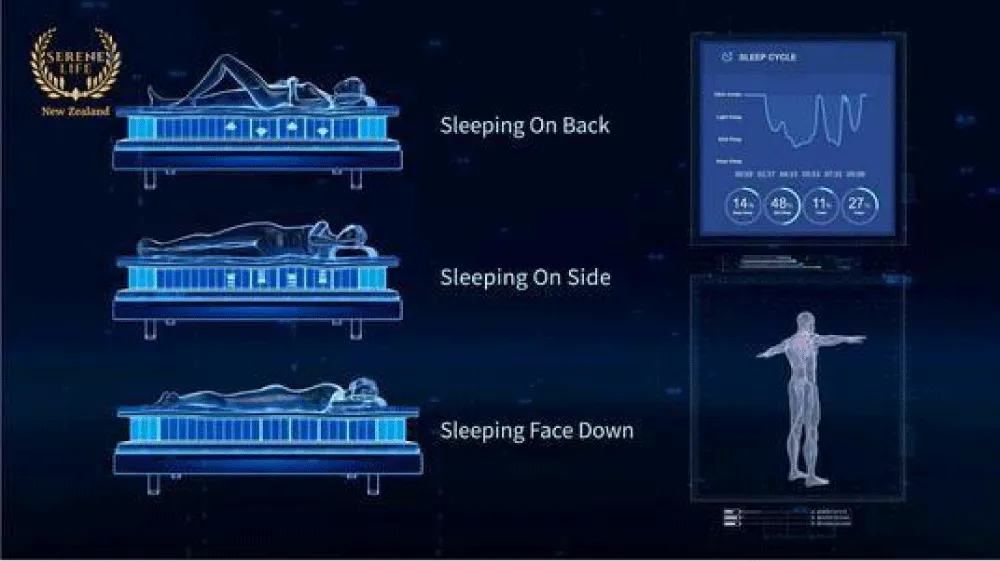
Smart beds combine AI-driven analytics using sensors and adaptive biomechanics using a mattress that is therapeutic as a sleep surface since it provides real-time postural alignment throughout the night [1]. They have the potential to influence an individual’s sleep and health differently, particularly adults. Smart beds use multiple biosensors for pressure sensing and modulate the dynamic sleep surface for pressure redistribution of each user, irrespective of his or her height or weight, or age [3]. The Smart Tek AI seems to be a remarkable breakthrough as a smart-bed in New Zealand, as its advanced features include effects of adaptive firmness, cradling, zero-G, relaxation, decompression, etc., which have the potential to restore and rehabilitate the body. Smart beds are known to improve sleep quality and clinical recovery [4]. The Smart Tek AI could shape behavior and customize lifestyles owing to comprehensive health metrics generated via its Sleep App. The Smart Tek AI bed’s main strengths are customization, monitoring, and automation. Its biggest health-related claim is that it may help users achieve a more comfortable, better-monitored sleep environment with tailored support and pressure redistribution. In fact, the normal conventional sleeping postures of sleeping on the back, side, or tummy may now be transformed to other unique positions owing to the tilting response of the smart mattress at both ends. Pillows may or may not be used, or a lower profile pillow could be used at an elevated head position. Elevation of the feet can help as well. The zero-G is another advantageous position that helps blood circulation better. It allows multiple user interfaces (Figure 1).
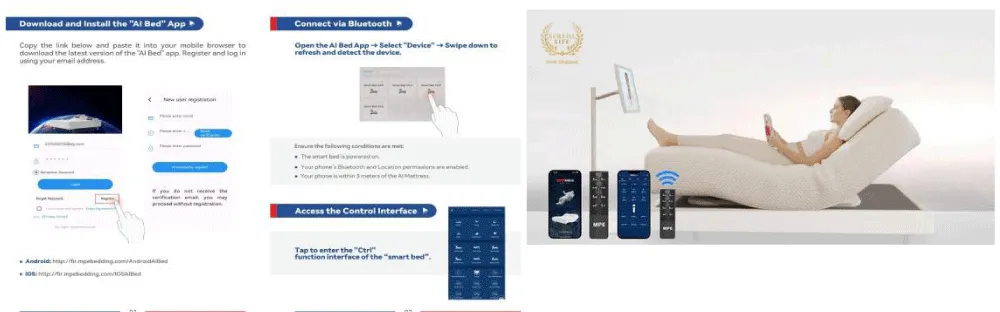
Methods: Technology note-product overview
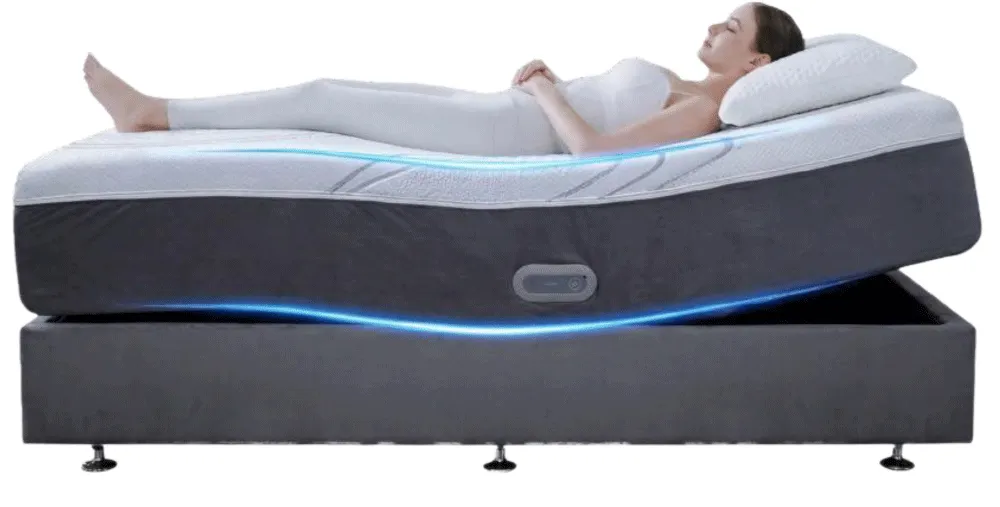
The Smart Tek Ai is essentially a dynamic intelligent mattress system with a 6-Zone Adaptive Sleep Surface, which integrates pressure and biometric sensors to constantly track body posture movement, respiration, heart rate, and sleep stages metrics. It features automated micro-adjustment tech for instant pressure redistribution and musculoskeletal support; it also has low-frequency wave decompression modules with graphene-based thermal regulation to optimize comfort circulation and sleep temperature. The mattress has been integrated with a motorized adjustable base and controlled via app-based and voice-enabled interfaces to enhance the user interface for sleep ergonomics. The Smart bed is personalized, offering ultimate comfort and support to help one sleep better and wake up refreshed. The Smartek AI bed uses a variety of sensors to collect data on each user’s sleep patterns, preferences, and body vitals. This data is then analysed by AI algorithms to create a personalized profile. Based on an individual’s sleep profile, the bed automatically adjusts its settings to provide the best possible sleep experience. The bed is smart and adjusts its firmness and elevation while the base remains static (Figure 2).
To break down its composition, internally, the smart bed is composed of an integrated, multi-layered system combining embedded physiological sensing and adaptive support structures. At its core, the sophisticated architecture of the sleep system surface comprises high-grade breathable materials with multiple zones, a gel-foam layer, and a foot constant-temperature graphene heating feature with air chambers. Adaptive air-cells as a responsive sleep system adjust firmness and load distribution across multiple zones to maintain the best possible ergonomic support [3]. It is composed of the three key layers as shown in Figure 3.
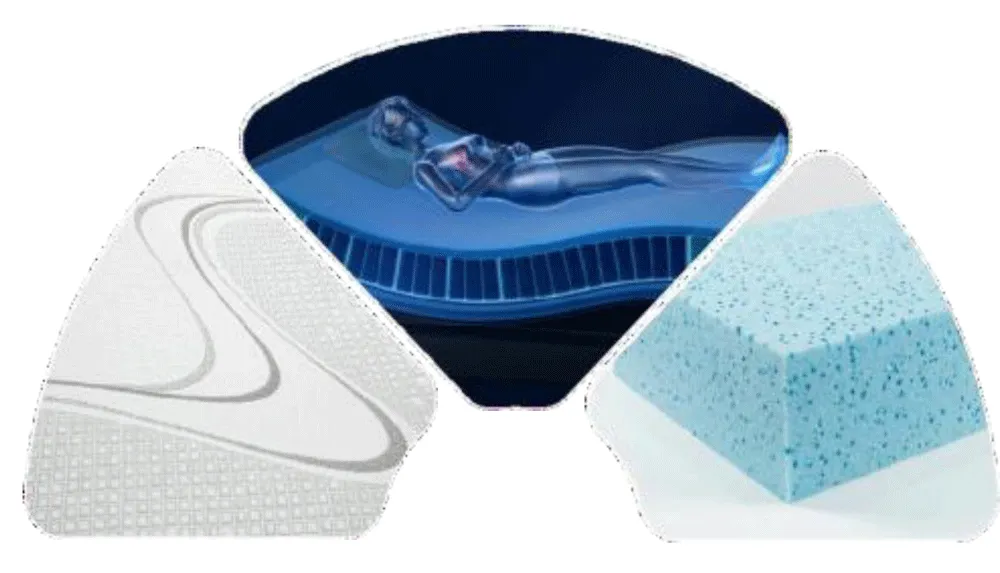
Dual 6-Zone Air Chambers - Independent air zones for personalized firmness. Provides tailored comfort for both sides of the bed.
Cooling Fabric - Breathable material regulates temperature efficiently. Maintains a consistently cool sleep surface.
Ortho Cool Gel Memory Foam - Multi-layered support with cooling gel infusion. Contours with the body while reducing heat buildup (Figure 3).
The significance of its broad ecosystem integration enables it to connect with diverse sleep bands and pressure detection modules. The highly granular body-zone support has six zones for hardness adjustment, which is useful for customizing spinal alignment and comfort to different body types. The mattress has a nice, thick girth with excellent comfort fit. The smart mattress can be elevated upwards and downwards based on voice or remote. The mattress has a preset memory and auto-inflation, so different users can return it to preferred settings quickly and maintain consistency. A central AI control unit in smart-bed processes real-time data using machine learning algorithms to infer sleep patterns and health-related data [1]. The physiological sensing through the mattress architecture shown in Figure 4 allows minute pressure detection and sleep monitoring [5]. Versions could incorporate massage (rolling wave vibrations) and other features within their scope of functioning.
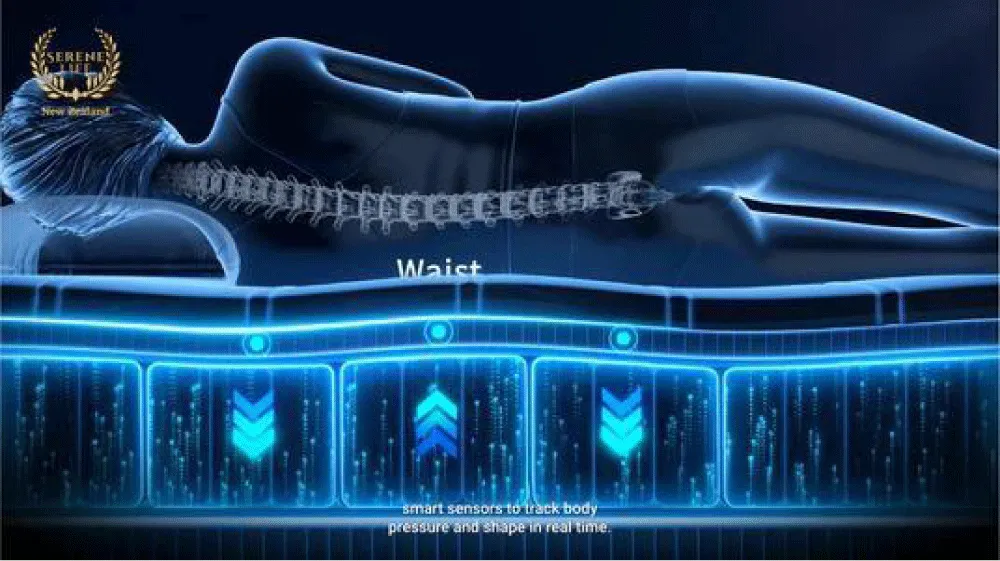
Technical Note – The core features of the Smart Tek AI include Sleep Aid Mode, Decompression Mode, Sleep Tracking Analysis, Automatic Wake Up Function, and AI Voice Control. The Health Monitor captures real-time data on personal Health parameters. Smart Sensors are embedded inside the Dynamic Mattress to sense and track body pressure in real-time to mold according to a user’s body shape and size. The Smart Tek AI has multiple control options, including a wired remote, mobile application, and voice control. The setup is by a user manual, and the Sleep Tracking and Health Metrics App software can be periodically updated. It is electrically connected to power circuits; it does not generate any harmful radiation around it. The device management, Wi-Fi-connect, monitoring interfaces, pressure sensing systems device, and generating sleep reports or health reports are interconnected automated functions that can be activated once the system hardware and software are connected.
Results
Circadian neuroscience offers promise to enhance brain function, recuperation, and long-term health by matching endogenous biological cycles with external environmental cues. This can be uniquely facilitated by tailoring sleep surfaces that directly influence deeper sleep or sleep latency, sleep efficiency, and sleep cycle duration [6]. We need to reorient our focus to understand that static sleep surfaces and dynamic sleep surfaces are both very different. Culturally and traditionally, more use of static surfaces/beds/mattresses is currently afforded in society. However, on newer provisions, the options of choice, availability, perception, and comparison of innovations can be systematically carried out qualitatively and quantitatively. Dynamic surfaces may influence user satisfaction differently when compared with static surfaces [6], and a comparative analysis of ethnic preferences in user satisfaction for sleep surfaces may also be seen [6].
AI-enabled sleep systems may allow for better entrainment of circadian sleep-wake rhythm via the body clock with external sleep surfaces since they can be modulated by zeitgebers (time givers) like temperature, light, relative humidity, pressure redistribution, other cues, etc. [2]. An earlier study on an AI-smart bed with controlled thermoregulation improved sleep quality metrics, including sleep score, sleep latency, and restorative sleep parameters at lower temperature [7]. Therapeutic sleep surfaces have been recommended for restorative support for alleviation of sleep disorders, as well as rehabilitation, both of which are essential in New Zealand [6]. Usage of such automated sleep eco-systems could perhaps increase circadian entrainment to improve sleep quality and sleep-wake cycle efficiency to mitigate risks of different health issues, such as osteoarthritis, and prevent arthroplasty surgeries, which are a public health burden in New Zealand (Satralkar, unpublished) [8].
It is essential to clear the misunderstanding that AI-Sleep Systems are only suitable for hospitals, clinics, or elderly patients, although this is true as a fact [9,10], they can be used by normal healthy people. AI-enabled adaptive sleep systems were shown to provide superior sleep comfort, pressure redistribution, and physiological sleep optimization compared with conventional static sleep surfaces in healthy adults [11]. Research also proposed AI-driven personalized sleep-quality prediction and feedback systems using IoT and smart sleep technologies to improve long-term sleep health in adults [12]. Healthy young adults sleeping on an adjustable smart zoned air mattress demonstrated improved sleep efficiency, altered autonomic nervous system activity, and enhanced sleep-related physiological responses compared with an ordinary mattress [11] (Figure 5).
Discussion
The Smart Tek AI, being neuro-adaptive, has the potential to enhance sleep health in normal healthy adults, but those with sleep disorders or orthopaedic issues will probably benefit more, as earlier studies showed smart-beds are highly relevant for orthopaedic rehabilitation, musculoskeletal recovery, chronic back pain, and posture optimization [13]. Gone are the days of soft, medium, plush mattresses, numbered mattresses, or adjustable bases. The Smart Tek AI is an innovation as a dynamic sleeping surface that has a medium firm feel, which can become softer or firmer based on one’s own unique BMI and sleeping position. The Smart Tek AI bed can thus be uniformly used by all. However, there are of course still advantages of using a static sleep surface; for example, the king, super king, and California king mattresses are a single unit size, whereas a dynamic super king is divided/partitioned/separated into two halves.
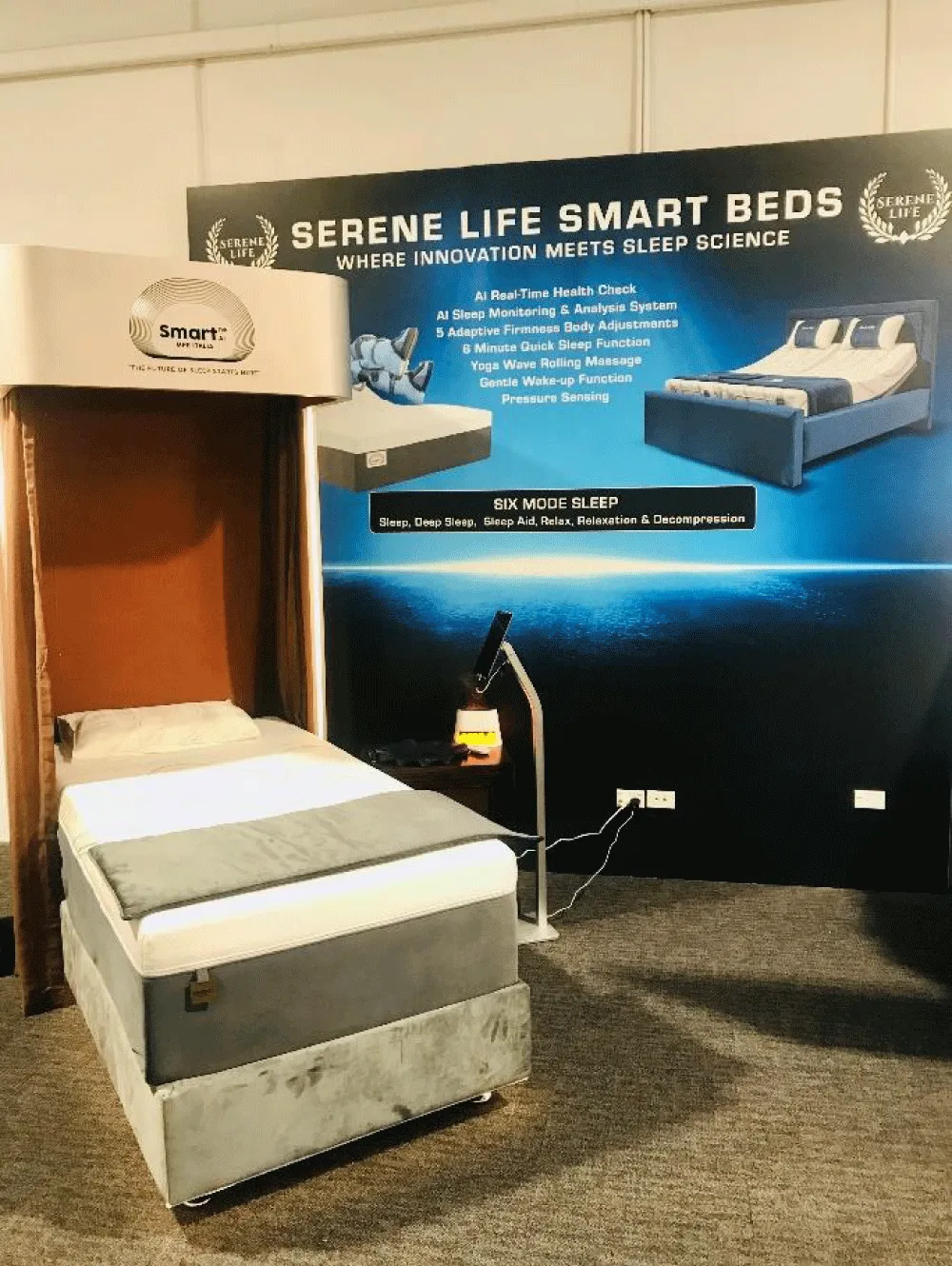
Monitoring of sleep and physiological signals may help users identify, track, and regulate sleep disruption patterns and independently adjust sleep habits [2]. The prescriptive and predictive recommendations of Smart Tek AI may be investigated via its robust Sleep App (Satralkar, unpublished). Smart beds orchestrate pressure redistribution and biomechanical balancing, improving comfort and potentially reducing musculoskeletal strain associated with poor sleep posture [14]. The Smart Tek AI is uniquely manufactured in different sizes, along with electronics and a user manual crafted as a Long Single, Queen, or Super King (two independent long singles with independent remotes). Its complete sleep-ecosystem is modulated automatically with adaptive pressure redistribution irrespective of different sizes, customized, with a long single set shown in the original photograph in Figure 5. The newer versions of the bed could include added features like rolling massage, additional health metrics, an advanced sleep app, customized sizes, etc. The future will keep it programmed for continuous improvement.
Both static or conventional sleep systems (mattresses and beds) are equally well positioned to provide excellent sleep and health; it is just evolutionary technology, which, being all pervasive, allowed for more improvisation to create another remarkable and distinct sleep eco-system to benefit a wide array of human physiologic functions. After referring to scientific research, it is evident that these AI-smart beds, if used earlier in mid-adult stages of life, may just provide strategic support in preventive medicine to avoid or reduce degenerative disorders and diseases in the latter years (Figure 6).
Global Scientific Research on Key Features and Associated Health Benefits of AI-Sleep Systems
1. AI Sleep Physiology Monitoring
Embedded with ballistocardiography (BCG) and pressure sensors, advanced AI-sleep systems can enable continuous real-time monitoring of heart rate, respiration, and micro-movements, supporting detection of sleep disturbances [3,5,11].
2. Multi-Zone Adaptive Pressure Control
A smart bed system capable of adaptive body-pressure control was shown to optimize spinal alignment, pressure dispersion, and biomechanical support across different body shapes and sleeping positions, relevant to orthopaedic recovery and [11,15].
3. Automated Postural Adjustment
AI-driven systems enable real-time adaptation of sleep surfaces in response to body movement and posture changes, with the aim of reducing prolonged static loading and improving sleep comfort. Smart bedding systems using sensors and intelligent monitoring improved perceived sleep comfort and contribute to better sleep quality [1,14,16].
4. Circadian Rhythm Support System
Sleep timing and environmental synchronisation are influenced by circadian regulation and multisensory sleep surfaces, which, when modified, may contribute to improved physiological sleep outcomes. AI-driven smart sleep systems can adapt to user sleep patterns to enhance sleep quality and overall well-being [17].
5. Real-Time Health Analytics
Continuous long-term data processing enables AI-generated sleep insights and feedback based on physiological signals, supporting personalised sleep monitoring and trend analysis. [1].
6. Therapeutic Pressure-Relief Surface
An AI-enabled smart mattress has been shown to improve pressure redistribution, reduce prolonged tissue loading, and support healing in patients with chronic pressure injuries, highlighting applications in orthopaedic rehabilitation, elderly care, and long-term musculoskeletal recovery [14,18]
7. Neurotechnology–Biomechanics Integration
This combines sleep neuroscience and physiological sensing to support integrated sleep monitoring and data-driven sleep-health systems rather than passive resting surfaces [2]. Research also showed that smart beds equipped with force sensors can continuously monitor nocturnal cardiovascular and autonomic nervous system activity, potentially assisting early detection of neurological and cardiovascular dysfunction [19].
8. Non-Invasive Continuous Monitoring
Passive sensing without wearables or user intervention enables unobtrusive sleep monitoring and supports continuous physiological data collection during natural sleep conditions without interrupting sleep cycles [5].
9. Personalized Adaptive Sleep Environment
AI-driven systems enable personalised analysis of physiological sleep data and provide real-time feedback tailored to individual sleep behaviour to support sleep optimisation [1]. They can also reduce immobility [9] and have been shown to improve sleep health [4].
10. Preventive Health Positioning
Studies have demonstrated that AI and machine-learning algorithms embedded within smart bed systems can identify insomnia risk and support early neurological and sleep-health intervention [19]. Smart bed studies also demonstrated associations between sleep timing, sleep regularity, cardiorespiratory health, and sleep metrics collected through smart bed technology (Garcia Molina et al., 2021).
Conclusions and limitations
Awareness of sleep science can enable decision-making for smart living. Static sleep systems do not have pressure adaptation or circadian integration with health metrics, which means that the mechanical pressure points stay the same and the sleep physiology or eco-system cannot be tracked, modulated, or optimized. Sleep plays a restorative role in the human body. Static surfaces may make it harder for joints to heal and speed up the process of degeneration as aging occurs. There may be limitations in conducting clinical trials with dynamic surfaces like Smart Tek AI, as they may take months or years of testing with a collaborative agency to reach conclusive evidence of how it impacts any disease. Medical trials could be labor-intensive and limited regarding costs, manpower, research designs, subjects, etc. Any innovation is not to be purchased with the attempt to use it to ‘cure’ any known/existing ailment. It is an interplay of complex variables and factors, including lifestyle, genetics, diet, environmental conditions, age, stress, and several other variables that may influence everyone’s sleep and health situation differently and cannot be generalized. It is thus up to the public to study sleep science and the advantages of innovations, weigh the pros and cons of static versus dynamic surfaces, and decide whether to invest in a cost-intensive dynamic sleep eco-system that may improve sleep, health, and lifestyle. There are several diseases, like osteoarthritis and arthroplasty [20,21-26], affecting nearly 17% of the population above 65 years of age [21], which are a public health burden that may already reference scientific use of dynamic surfaces to help complement treatments. However, the validation of AI Smart Beds in preventive medicine may need to be built up carefully through original research, position papers, product reviews, focus groups, or clinical case studies. This paper would like to provide initial advantages of the Smart Tek AI as a formal case study for normal healthy adults or couples for improving awareness of it. In fact, most individuals may favor a dynamic surface after knowing its advantages or after trialing its amazing snug comfort-fit; it is just the commercial cost factor or affordability factor that may be limiting initially, but that may change in the future.
Acknowledgements
The Author wishes to thank Heena Sikka, the Managing Director of New Zealand Bed Company, along with Ranjay Sikka, Founder of Slumberzone, for their significant contribution to ideation, investment, and collaborative development of Smart Tek AI for use within homes in New Zealand.
References
- Djanian S, Bruun A, Nielsen TD. Sleep classification using consumer sleep technologies and AI: A review of the current landscape. Sleep Medicine. 2022;100:390-403. Available from: https://doi.org/10.1016/j.sleep.2022.09.004
- Lujan MR, Perez-Pozuelo I, Grandner MA. Past, present, and future of multisensory wearable technology to monitor sleep and circadian rhythms. Frontiers in Digital Health. 2021;3:721919. Available from: https://doi.org/10.3389/fdgth.2021.721919
- Lin CL, Sun ZT, Chen YY. Air-mattress system for ballistocardiogram-based heart rate and breathing rate estimation. Heliyon. 2023;9(1):e12717. Available from: https://doi.org/10.1016/j.heliyon.2022.e12717
- Zhang Z, Jin X, Wan Z, Zhu M, Wu S. A feasibility study on smart mattresses to improve sleep quality. Journal of Healthcare Engineering. 2021;2021:6127894. Available from: https://onlinelibrary.wiley.com/doi/10.1155/2021/6127894
- Askjer S, Mathiasen K, Amidi A, Parsons C, Ladegaard N. Real-time unobtrusive sleep monitoring of in-patients with affective disorders: A feasibility study. 2023. Available from: https://arxiv.org/abs/2311.13457
- Satralkar M. Alleviating sleep disorders through targeted intervention using restorative-therapeutic surfaces in New Zealand. Journal of Clinical Neuroscience and Rehabilitation. 2026;2(1):27-31. Available from: https://www.neuroscigroup.com/jcnr/article/view/JCNR-2-105
- Garcia-Molina G, Rao MR, Chellamuthu V, McGhee L, Winger T, Makaram N, et al. Temperature programs to enhance sleep quality: Gender dependency considerations. Sleep. 2025;48(Suppl 1):A595-A596. Available from: https://doi.org/10.1093/sleep/zsaf090.1384
- Satralkar Moses (2026). Neurotechnology for Circadian Sleep Optimization using AI Smart Beds to Mitigate Osteoarthritis and Arthroplasty. Neurology Research and Surgery. In Press.
- Ziegler S, Schmoor C, Schöler LM, Schepputat S, Takem E, Grotejohann B, et al. Potential for reducing immobility times of a mobility monitor in-bed sensor system: A stepped-wedge cluster-randomised trial. BMC Nursing. 2024;23:32. Available From: https://doi.org/10.1186/s12912-023-01658-2
- Hong YS. Smart care beds for elderly patients with impaired mobility. Wireless Communications and Mobile Computing. 2018;2018:1780904. Available from: https://doi.org/10.1155/2018/1780904
- Yu W, Zhu Y, Zhou Y, Yu X, Lin H, Ruan L, et al. Investigating the influence of an adjustable zoned air mattress on sleep: A multinight polysomnography study. Frontiers in Neuroscience. 2023;17:1160805. Available from: https://doi.org/10.3389/fnins.2023.1160805
- Gan W, Dao MS, Zettsu K. Monitoring and improving personalized sleep quality from long-term lifelogs. arXiv [Preprint]. 2022. Available from: https://arxiv.org/abs/2211.12778
- Verhaert V, Van Deun D, Verbraecken J, Vandekerckhove M, Exadaktylos V, Haex B, et al. Smart control of spinal alignment through active adjustment of mechanical bed properties during sleep. Applied Intelligence. 2013;5(4):547-562. Available from: https://doi.org/10.3233/AIS-130216
- Bai X, Zhong M, Liu Y, Hu Y, Ma J. Comprehensive analysis of smart bed comfort across varied resting conditions using quantitative measures. PLOS ONE. 2025;20(7):e0327241. Available from: https://journals.plos.org/plosone/article?id=10.1371/journal.pone.0327241
- Ito J, Usuki S. Measurement and control of body pressure towards smart bed system. International Journal of Automation Technology. 2024;18(1):104-111. Available from: https://doi.org/10.20965/ijat.2024.p0104
- Bai X, Liu Y, Dai Z, Chen Y, Fang P, Ma J. Determinants of perceived comfort: Multi-dimensional thinking in smart bedding design. Sensors. 2024;24(13):4058. Available from: https://doi.org/10.3390/s24134058
- Gamel SA, Talaat FM. SleepSmart: An IoT-enabled continual learning algorithm for intelligent sleep enhancement. Neural Computing and Applications. 2024;36:4293-4309. Available from: https://doi.org/10.1007/s00521-023-09310-5
- Ni TF, Wang JL, Chen CK, Shih DF, Wang J. Can a prolonged healing pressure injury be benefited by using an AI mattress? A case study. BMC Geriatrics. 2024;24:307. Available from: https://doi.org/10.1186/s12877-024-04900-x
- Winger T, Chellamuthu V, Guzenko D, Aloia M, Barr S, DeFranco S, et al. Fine tuned personalized machine learning models to detect insomnia risk based on data from a smart bed platform. Frontiers in Neurology. 2024;15:1303978. Available from: https://doi.org/10.3389/fneur.2024.1303978
- Lao C, Lees D, Patel S, White D, Lawrenson R. Geographical and ethnic differences of osteoarthritis-associated hip and knee replacement surgeries in New Zealand: A population-based cross-sectional study. BMJ Open. 2019;9(9):e032993. Available from: https://doi.org/10.1136/bmjopen-2019-032993
- Health New Zealand. Osteoarthritis [Internet]. 2025 [cited 2026 May 29]. Available from: https://www.healthnz.govt.nz/health-topics/conditions-treatments/bones-and-joints/osteoarthritis
- Garcia-Molina G, Chellamuthu V, Lea B, Aloia M, Wu M, Mills R. Observational study to understand the effect of timing and regularity on sleep metrics and cardiorespiratory parameters using data from a smart bed. Chronobiology International. 2024;41(2):213-225. Available from: https://doi.org/10.1080/07420528.2023.2298267
- Gao C, Haghayegh S, Wagner M, Cai R, Hu K, Gao L, et al. Approaches for assessing circadian rest-activity patterns using actigraphy in cohort and population-based studies. Current Sleep Medicine Reports. 2023;9(4):247-256. Available from: https://doi.org/10.1007/s40675-023-00267-4
- Hwang E, Czeisler CA, Rahman SA. Temperature programs to enhance sleep quality: Gender dependency considerations. Sleep. 2025;48(Suppl 1):A595-A596. Available from: https://doi.org/10.1093/sleep/zsaf090.1384
- Satralkar M. Advancing AI-sleep systems to restore neurological sleep disorders and precision health in New Zealand. Journal of Neuroscience and Neurological Disorders. 2026;10(1):15-24. Available from: https://doi.org/10.29328/journal.jnnd.1001116
- Winger T, Garcia-Molina G. Unobtrusive detection of heart-rate-dipping during sleep based on force sensors in a smart bed. Sleep. 2024;47(Supplement_1):A140. https://doi.org/10.1093/sleep/zsae067.0326
Advertisement



 Save to Mendeley