Global Journal of Medical and Clinical Case Reports
Acupuncture Combined with Repetitive Transcranial Magnetic Stimulation in the Treatment of Swallowing Apraxia after Stroke
Department of Rehabilitation Medicine, the First Hospital of Jilin University, Changchun 130021, China
Author and article information
Cite this as
Yao X, Ningyi M, Jianfang L, Lianxi D, Xuncan L, Xiaowei C, et al. Acupuncture Combined with Repetitive Transcranial Magnetic Stimulation in the Treatment of Swallowing Apraxia after Stroke. Glob J Medical Clin Case Rep. 2026:13(6):119-123. Available from: 10.17352/gjmccr.000253
Copyright License
© 2026 Yao X, et al. This is an open-access article distributed under the terms of the Creative Commons Attribution License, which permits unrestricted use, distribution, and reproduction in any medium, provided the original author and source are credited.Abstract
Swallowing apraxia (SA) represents a distinct subtype of swallowing dysfunction, with its pathogenesis remaining unclear and no unified or standardized treatment protocols currently available. Both domestically and internationally, understanding of SA remains insufficient, and clinical research reports related to SA are scarce. This article describes the clinical course of a 43-year-old SA patient post-stroke who exhibited observed clinical improvement over the course of a multimodal rehabilitation program, aiming to enhance understanding of SA and propose a promising comprehensive treatment approach.
Swallowing apraxia (SA) refers to the inability of the tongue, lips, and mandible to execute swallowing movements as instructed during the oral phase of swallowing, despite the absence of motor, sensory, or reflex impairments following central nervous system injury [1]. According to statistics, the incidence of swallowing apraxia caused by primary progressive aphasia in stroke patients abroad is approximately 69%, with some studies reporting rates as high as 94% [2]. Currently, both domestically and internationally, the understanding of SA remains insufficient, and clinical research reports related to SA are limited. Clinical treatment for SA primarily focuses on cognitive-improving medications, while rehabilitation therapy often employs transcranial direct current stimulation to alleviate SA symptoms, though with suboptimal efficacy [3]. Most researchers consider scalp acupuncture a microneedling therapy whose theoretical foundation integrates traditional acupuncture principles with modern cortical functional localization and biological holographic theories [4,5]. By stimulating specific scalp regions, this approach induces corresponding physiological responses in the relevant cortical functional areas. Studies have demonstrated that the anterior and posterior 2/5 regions of the parietotemporal lines correspond to the cortical projections responsible for oral, lingual, and pharyngeal motor and sensory functions. Scalp acupuncture not only enhances the regulatory role of the swallowing center in the cerebral cortex and brainstem reticular formation on the swallowing reflex but also coordinates swallowing muscle movements and improves cerebral blood supply, thereby compensating for or remodeling the swallowing reflex pathway to facilitate functional recovery [6-8]. Literature confirms the efficacy of GV20, GV16, and CV23 in treating swallowing disorders in stroke patients [9], although further research is warranted regarding the application of scalp acupuncture in swallowing apraxia. Repetitive transcranial magnetic stimulation (rTMS) can enhance or reduce neuronal excitability to modulate local or whole-brain network states, aiming to promote brain functional remodeling and thereby restore swallowing physiological function [10]. Multiple reviews and meta-analyses have demonstrated that rTMS effectively improves swallowing function and rehabilitation of dysphagia in stroke patients [11-13]. rTMS also shows potential efficacy in improving limb apraxia and speech apraxia [14,15], although its role in swallowing apraxia requires further validation. In summary, both scalp acupuncture and rTMS can modulate neurotransmitter transmission, facilitate brain functional recovery and reconstruction, and enhance cerebral circulation [16,17]. However, the combined therapeutic efficacy of these two modalities for stroke-associated dysphagia (SA) remains unclear, with limited research in this area. This study employed scalp acupuncture combined with rTMS in an SA patient and demonstrated temporal improvements in swallowing function over the treatment period. Given the single-case, uncontrolled design, these outcomes represent a temporal association and cannot be attributed to any specific intervention. The details are reported as follows.
Clinical data
Basic information
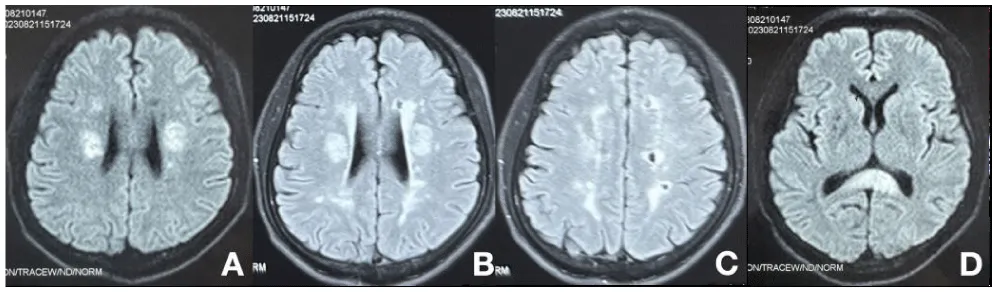
Patient: Male, 43 years old. Admitted due to “dysphagia with slurred speech for 18 days.” Past medical history: One-month history of upper gastrointestinal ulcer bleeding; no history of hypertension, coronary heart disease, or diabetes mellitus. Physical examination: Gastric tube in place; conscious but apathetic; unable to speak (cannot perform voluntary movements for speech production or verbal expression). Mini-Mental State Examination (MMSE) score: 22; Montreal Cognitive Assessment (MoCA) score: 23. Impaired memory, orientation, and calculation ability. Normal bilateral eye movement; equal-sized, round pupils; sensitive to light reflexes. Pharyngeal reflex present; bilateral palmar-mandibular reflexes present; limited mouth opening; tongue cannot be extended; unable to perform voluntary chewing, swallowing, blinking, or mouth-opening movements. Watada Water Swallowing Test (WST) result: Grade 5. Functional Oral Intake Scale (FOIS) result: Grade 3. Normal muscle strength and tone in all four limbs. No significant abnormalities in bilateral finger-nose test or heel-knee-shin test; Romberg sign negative; basic normal deep and superficial sensation; no abnormalities in deep or superficial reflexes; no pathological signs elicited. Barthel Index (BI): 80 points (0 for eating, 10 for walking, 5 for stair climbing; remaining points represent maximum capacity). All examination results indicated oral and facial apraxia and speech apraxia. Auxiliary examination: Head MRI revealed acute-phase cerebral infarction in the bilateral basal ganglia, corona radiata, semicircular center, adjacent to the posterior angle of the left lateral ventricle, and corpus callosum compression area (Figure 1). Swallow contrast study: Poor oral coordination, prolonged food pellet transit time, abnormal movement patterns, and significant oral food retention. Clinical diagnosis: Cerebral infarction, dysphagia, speech impairment, and cognitive impairment.
Treatment protocol and evaluation methods
Conventional rehabilitation training primarily includes oral sensory and motor exercises (such as cold stimulation training, olfactory and gustatory stimulation, tactile stimulation, vibration stimulation, K-point stimulation, and pneumatic pulse sensory stimulation training), strength training for various swallowing muscle groups, Shaker training (head elevation training), and articulatory organ training.
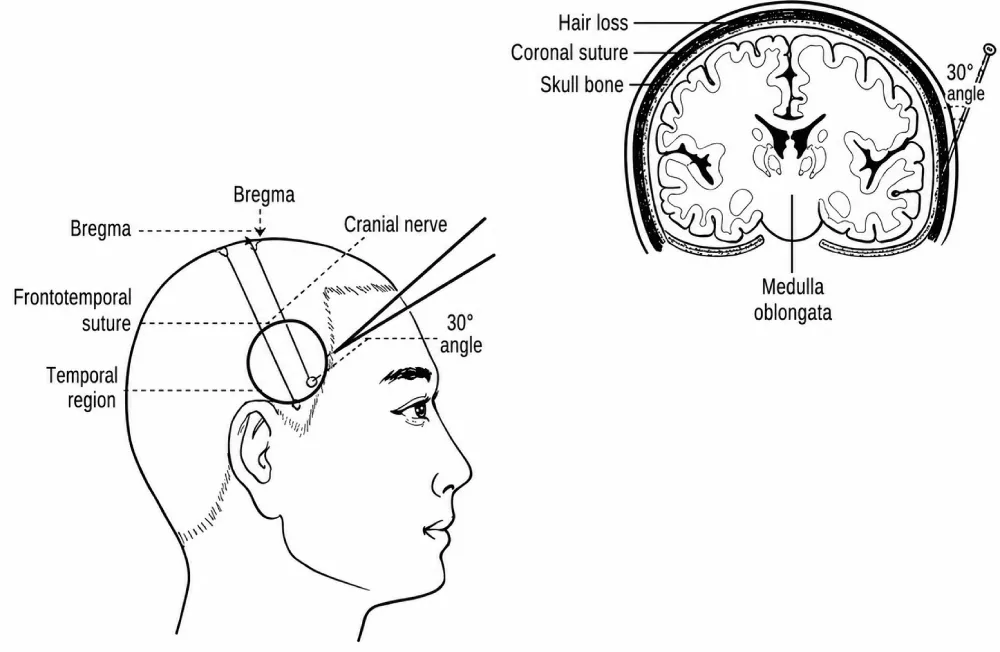
Acupoint Therapy: Acupoint selection: The bilateral anterior parietotemporal line at the lower 2/5 (on the lateral head, along the line connecting the Shencong point to the Xuanli point) and the posterior parietotemporal line at the lower 2/5 (on the lateral head, along the line connecting the Baihui point to the Qubin point) were selected in accordance with the standards of the International Standardized Nomenclature of Scalp Acupoints.
Procedure: The patient is placed in a seated position, with the acupuncture sites fully exposed and routinely disinfected with 75% alcohol. A 0.30×40 mm Hua Tuo brand micro-needle is selected. The operator holds the needle with the right hand and inserts it at a 30-degree angle to the scalp. When the subdigital resistance decreases and the patient experiences localized soreness and distension, indicating that the needle tip has reached the galea aponeurotica, the insertion is halted. Subsequently, a gentle, clockwise twisting maneuver is performed at a rapid pace for 1 minute, followed by needle retention for 20 minutes. Treatment frequency: 1 session/day, 6 sessions/week, for a total of 4 consecutive weeks. Refer to Figure 2 for details.
rTMS Therapy: An “8” -shaped coil (Denmark, model MagPro R30) equipped with a transcranial magnetic stimulator was used. The center of the stimulation coil was aligned parallel to the skull above the right dorsolateral prefrontal cortex (DLPFC). The stimulation parameters were set as follows: frequency 1 Hz, intensity 45% of the RMT threshold, 1200 pulses. The treatment protocol consisted of 1 session per day for a total duration of 15 minutes, administered 6 times per week for a continuous period of 4 weeks.
Evaluation Method: Before treatment and four weeks after treatment, the patients’ swallowing function, cognitive abilities, speech function, and activities of daily living were assessed using the WST scale, FOIS scale, oral and facial apraxia assessment scale, as well as the MMSE, MoCA, and BI scales.
Treatment outcomes
After 4 weeks of acupuncture combined with rTMS treatment, the patient’s swallowing function improved from initially relying on tube feeding to attempting minimal oral intake, although aspiration remained significant. After 2 weeks of treatment, coughing during water intake and aspiration significantly decreased, allowing the patient to consume low-viscosity foods orally. By the 4-week mark, oral food and fluid intake met physiological needs without coughing, meeting the criteria for nasogastric tube removal, which was subsequently performed. The WST scale score decreased, indicating improvement post-treatment; the FOIS scale score increased, reflecting better outcomes. Motor function of the mouth, cheeks, and tongue showed marked enhancement, enabling normal communication despite a slightly slower speech rate compared to pre-onset levels. Both oral-facial apraxia and speech apraxia assessment scales returned to normal, confirming post-treatment improvement. Details are presented in Table 1. The patient’s cognitive function and activities of daily living improved, with significant increases in MMSE, MoCA, and BI scores, further demonstrating therapeutic efficacy. Details are provided in Table 2.
Discussion
Swallowing apraxia (SA) is a distinct subtype of dysphagia in which patients fail to execute voluntary swallowing movements with the oral, lingual, and pharyngeal musculature on command, despite intact strength, sensation, and reflexive swallowing [18]. This dissociation between impaired volitional and preserved automatic swallowing was consistently observed in our patient: videofluoroscopy revealed delayed oral-phase initiation with retained pharyngeal-phase reflexes, while standardized examinations confirmed coexisting oral-facial and speech apraxia. Together with MRI evidence of acute infarction involving bilateral basal ganglia, corona radiata, and corpus callosum—regions implicated in praxis and interhemispheric sensorimotor integration—these findings substantiate the clinical diagnosis of SA, distinguishing it from dysphagia due to primary weakness, aphasia, or isolated cognitive impairment.
Given the paucity of established SA-specific treatments, we employed a multimodal rehabilitation program that combined conventional swallowing therapy, scalp acupuncture, and repetitive transcranial magnetic stimulation (rTMS). The selection of scalp acupuncture sites—the lower two-fifths of the anterior and posterior parietotemporal oblique lines—was based on their somatotopic correspondence to the primary sensorimotor cortical representations of the oropharynx [19-25]. Prior studies have demonstrated that needling these regions can enhance regional cerebral blood flow and modulate cortical excitability in the swallowing network, potentially facilitating experience-dependent neuroplasticity during dysphagia rehabilitation [26-30]. Systematic reviews further suggest that scalp acupuncture, when added to conventional swallowing therapy, is associated with improved functional outcomes in post-stroke dysphagia, although high-quality trials remain limited [9,23].
The concurrent application of low-frequency (1 Hz) rTMS to the right dorsolateral prefrontal cortex (DLPFC) was motivated by the DLPFC’s well-documented role in the cognitive preparatory phase of swallowing, including attentional allocation and movement planning. In post-stroke dysphagia, non-invasive brain stimulation targeting either the motor or prefrontal cortices has shown promise; for instance, both excitatory protocols over the pharyngeal motor cortex and inhibitory protocols over the unaffected hemisphere have yielded measurable gains on swallowing scales. According to the interhemispheric competition model, unilateral stroke disrupts the reciprocal inhibitory balance, leading to excessive inhibition from the contralesional hemisphere. Low-frequency rTMS can transiently suppress this overactivity, thereby facilitating the re-emergence of function in perilesional areas. From this perspective, targeting the right DLPFC—an area not directly involved in primary motor execution but crucial for higher-order control—may have contributed to the improvements in volitional swallowing initiation and cognitive performance observed in our patient. It should be noted, however, that the precise mechanisms by which DLPFC stimulation influences swallowing recovery remain incompletely understood, and the evidence for cognitive-related swallowing gains is still emerging.
Several limitations must be acknowledged. The patient simultaneously received conventional rehabilitation, scalp acupuncture, and rTMS; therefore, the relative contribution of each component remains unknown. Additionally, spontaneous neurological recovery during the subacute post-stroke period may partly account for the functional gains. These factors preclude any causal attribution of the observed improvements to the acupuncture–rTMS combination alone.
In conclusion, this case illustrates that a structured rehabilitation program integrating conventional therapy, scalp acupuncture, and prefrontal rTMS was temporally associated with meaningful improvements in swallowing, cognitive, and communicative function in a patient with carefully characterized post-stroke SA. While the findings underline the importance of distinguishing apraxic dysphagia from other post-stroke swallowing disorders and pursuing individualized, multimodal rehabilitation strategies, they do not establish efficacy. Controlled studies are required to evaluate the specific benefit of neuromodulation-based protocols for SA and to delineate the active therapeutic components.
Patient consent statement
The patient has provided informed consent for publication of the case.
Ethics statement
The ethics approval statement identifying the ethics committee and approval number is 2025-040.
Funding
This research received no external funding.
Consent for publication
The identifying data and images in this manuscript that they will be freely available on the internet.
Author contributions
Chen Xiaowei: conceptualization, writing-review and editing, project administration.
Xu Yao: conceptualization, writing original draft, methodology, data curation.
Ma Ningyi: data curation, methodology,writing-original draft.
Li Jianfang: methodology, data curation.
Dong Lianxi: conceptualization, data curation.
Liu Xuncan: methodology, data curation.
Li Zhenlan: methodology.conceptualization.
Data availability
The authors confirm that the data supporting the findings of this study are available within the manuscript.
Adverse events
No adverse events, discomfort, or complications related to scalp acupuncture, rTMS, or rehabilitation training were observed or reported during the entire treatment period and follow‑up phase.
Limitations
This is a single‑case report without a control group. The patient received combined conventional rehabilitation, scalp acupuncture, and rTMS; thus, the specific contribution of each intervention cannot be determined. Spontaneous neurological recovery may also have influenced the outcomes. The single‑case design and multiple concurrent therapies limit causal interpretation. Larger controlled studies are needed to confirm these preliminary findings.
References
- Mohammed AA, Saeed AA, Saad EA, Al Harbi AA, Alghamdi KA, Saeedi J, et al. Swallowing apraxia post ischemic stroke. Int J Environ Res Public Health. 2022;19(23):16329. Available from: https://doi.org/doi:10.3390/ijerph192316329
- Maki K, Oki S, Kono K. Buccofacial apraxia in primary progressive aphasia. Cortex. 2023;158:1-12. Available from: https://doi.org/10.1016/j.cortex.2022.10.010
- Jayasekeran V, Singh S, Tyrrell P. Adjunctive functional pharyngeal electrical stimulation reverses swallowing disability after brain lesions. Gastroenterology. 2010;138(5):1737-1746. Available from: https://doi.org/:10.1053/j.gastro.2010.01.052
- Li W, Lin D, Zou YH. Research progress on the mechanism of scalp acupuncture in treating hemiplegia after ischemic stroke. China J Tradit Chin Med Inf. 2021;28(5):128-132.
- Yu Z. Study on the localization of scalp acupuncture theory in the cerebral cortex and its pairing with peripheral nerves [dissertation]. Guangzhou: Guangzhou University of Chinese Medicine; 2017.
- Van Roo JD, Lazio MP, Pesce C. Visual analog scale (VAS) for assessment of acute mountain sickness (AMS) on Aconcagua. Wilderness Environ Med. 2011;22(1):7-14. Available from: https://doi.org/10.1016/j.wem.2010.10.002
- Yu J, Zhu Y, Mao JH, Yuan JH, Xu YL, Huang JX, et al. Scalp-nape acupuncture as adjuvant therapy for pharyngeal dysphagia of stroke at recovery stage: a randomized controlled trial. Chin Acupunct Moxibustion. 2022;42(5):481-485,497. Available from: https://doi.org/10.13703/j.0255-2930.20210620-k0003
- Jin HP, Li XL, Ye QJ. Effect of bilateral scalp acupuncture electrical stimulation on swallowing imaging time parameters and cortical excitability in patients with cortical stroke-induced dysphagia. Acupunct Res. 2020;45(6):473-479. Available from: https://doi.org/10.13702/j.1000-0607.190697
- Belskaya GN, Stepanova SB, Makarova LD, Sergienko DA, Krylova LG, Antimonova KV. Acupuncture in the prevention and treatment of stroke: a review of foreign studies. Vopr Kurortol Fizioter Lech Fiz Kult. 2020;97(2):68-77. Russian. Available from: https://doi.org/10.17116/kurort20209702168
- Sun PY, Wang GP, Li PF. Diagnosis and treatment plan for post-stroke dysphagia (pseudomedullary paralysis) using traditional Chinese and Western medicine. J Anhui Univ Chin Med. 2023;42(6):16-22.
- Doeltgen SH, Bradnam LV, Young JA, Fong E. Transcranial non-invasive brain stimulation in swallowing rehabilitation following stroke: a review of the literature. Physiol Behav. 2015 May 1;143:1-9. Available from: https://doi.org/10.1016/j.physbeh.2015.02.025
- Li Y, Chen K, Wang J, Lu H, Li X, Yang L, et al. Research progress on transcranial magnetic stimulation for post-stroke dysphagia. Front Behav Neurosci. 2022;16:995614. Available from: https://doi.org/10.3389/fnbeh.2022.995614
- Papadopoulou SL, Ploumis A, Exarchakos G, Theodorou SJ, Beris A, Fotopoulos AD. Versatility of repetitive transcranial magnetic stimulation in the treatment of poststroke dysphagia. J Neurosci Rural Pract. 2018;9(3):391-396. Available from: https://doi.org/10.4103/jnrp.jnrp_68_18
- Shpiner DS, McInerney KF, Miller M, Allen J, Rice J, Luca CC, et al. High-frequency repetitive transcranial magnetic stimulation for primary progressive apraxia of speech: a case series. Brain Stimul. 2019;12(6):1581-1582. Available from: https://doi.org/10.1016/j.brs.2019.07.007
- Pastore-Wapp M, Nyffeler T, Nef T, Bohlhalter S, Vanbellingen T. Non-invasive brain stimulation in limb praxis and apraxia: a scoping review in healthy subjects and patients with stroke. Cortex. 2021;138:152-164. Available from: https://doi.org/10.1016/j.cortex.2021.02.006
- Nitta N, Shiino A, Watanabe TSakaue Y, Nozaki K. Buccofacial apraxia without limb apraxia or aphasia after right premotor area contusion: a case report. No Shinkei Geka. 2012;40(11):985-990. Available from: https://pubmed.ncbi.nlm.nih.gov/23100387/
- Zhong HL, Wang JB, Cai C, et al. Clinical efficacy of low-frequency repetitive transcranial magnetic stimulation combined with melodic intonation therapy in the treatment of non-fluent aphasia during the convalescent stage of stroke. China Rehabil. 2023;38(1):4-8.
- Wang Q, Tao J, Liu FW. Research status on the classification and treatment of apraxia. J Pract Med. 2016;32(5):689-692.
- Zhang J, Ai L, Chen HY. Preliminary study on functional magnetic resonance imaging of the cortical swallowing center in normal adults. China Stroke J. 2006;(7):481-483.
- Chu J, Tang J, Yao HX, Wang YP. Clinical observation on the combined use of Zhongfeng Fuyuan Decoction and acupuncture in treating stroke-related dysphagia. J Hubei Univ Chin Med. 2016;18(5):85-87.
- Su LY. Observation on the effect of acupuncture on brain function in patients with post-stroke dysphagia [dissertation]. Guangzhou: Guangzhou University of Chinese Medicine; 2015.
- He SJ, Liu D, Luo KX. Research progress on scalp acupuncture in the treatment of dysphagia after stroke. World Chin Med. 2023;18(9):1348-1351.
- He SJ, Chen QG, Luo KX. Swallowing disorder after acoustic neuroma surgery treated with the “central-peripheral-central” closed-loop theory: a case report. Sichuan Med J. 2021;42(7):754-756.
- Liu SS. Effect of transcranial magnetic stimulation on executive function of the left dorsolateral prefrontal cortex and its neural mechanism: an ERP study [dissertation]. Guangzhou: Southern Medical University; 2021. Available from: https://doi.org/10.27003/d.cnki.gojyu.2021.000595
- Dong X, Sun J, Li L. Efficacy of high- and low-frequency repetitive transcranial magnetic stimulation in patients with post-stroke cognitive impairment and feeding/dysphagia. China Rehabil. 2023;38(8):455-459.
- He SJ, Chen XX, Chen QG, et al. Clinical efficacy of scalp acupuncture combined with a swallowing therapy device based on the “central-peripheral-central” closed-loop rehabilitation theory for post-stroke dysphagia. J Kunming Med Univ. 2023;44(8):105-109.
- Pisegna JM, Kaneoka A, Pearson WG Jr, et al. Effects of non-invasive brain stimulation on post-stroke dysphagia: a systematic review and meta-analysis of randomized controlled trials. Clin Neurophysiol. 2016;127(1):956-968. Available from: https://doi.org/10.1016/j.clinph.2015.04.069
- Zou F, Chen X, Niu L, Wang Y, Chen J, Li C, et al. Effect of repetitive transcranial magnetic stimulation on post-stroke dysphagia in acute stage. Dysphagia. 2023;38(4):1117-1127. Available from: https://doi.org/10.1007/s00455-022-10533-2
- Park E, Kim MS, Chang WH, Oh SM, Kim YK, Lee A, et al. Effects of bilateral repetitive transcranial magnetic stimulation on post-stroke dysphagia. Brain Stimul. 2017;10(1):75-82. Available from: https://doi.org/10.1016/j.brs.2016.08.00
- Grimm S, Beck J, Schuepbach D, Hella D, Boesiger P, Bermpohl F, et al. Imbalance between left and right dorsolateral prefrontal cortex in major depression is linked to negative emotional judgment: an fMRI study in severe major depressive disorder. Biol Psychiatry. 2008;63(4):369-376. Available from: https://doi.org/10.1016/j.biopsych.2007.05.033
Advertisement

 Save to Mendeley